

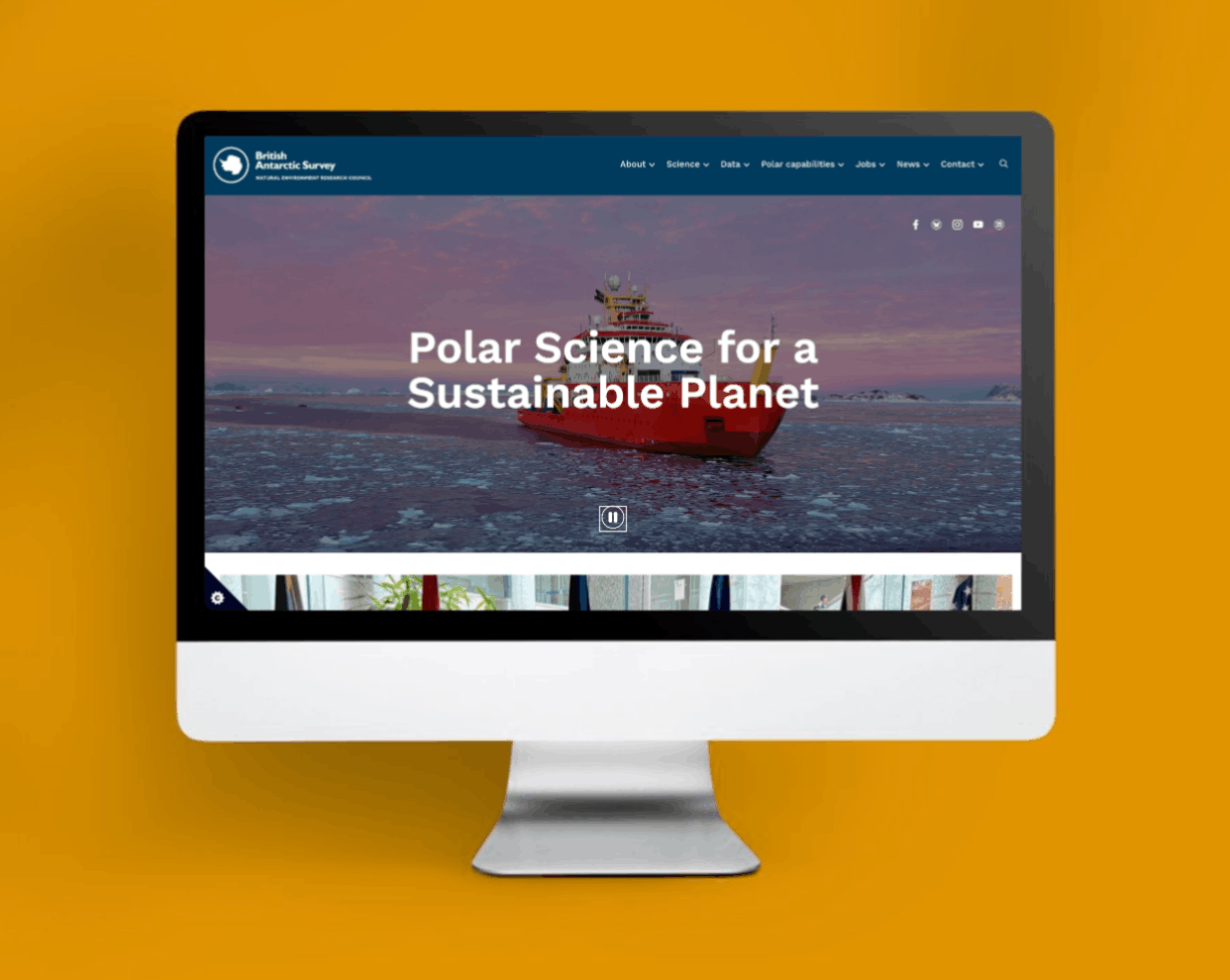
Audience-focussed content and training at British Antarctic Survey
Two Scroll content designers wrote about 150 pages of content for BAS’s new site, rationalising thousands of old pages and then training authors in user-centred content design.
The challenge
User research revealed that BAS’s old site had become burdened by unmaintained content and had unconsciously evolved to serve very specialist audiences instead of lay ones.
The solution
Scroll used the results of user research conducted by UK Research and Innovation (UKRI), together with an audit, to formulate a content strategy and prioritise BAS’s most critical pages.
We rewrote and created about 150 new pages in 3 months, in accessible language focussed on the primary lay audience.
We trained subject-matter expert authors in the principles of content design, with a customised training session that was recorded for ongoing learning
Scroll provided content governance documents, such as a new content process and guidance for authors.
How we worked
Scroll provided one content strategist / trainer and one senior content designer.
The strategist’s early work included auditing the site, producing a content strategy based on BAS’s user research, running workshops with stakeholders, and providing example content to demonstrate what Scroll could provide for the site overhaul.
The content strategist and content designer then worked in tandem to rewrite and create as much content as they could in the 3-4 months before the site was due to launch. This was prioritised by BAS into batches based on its importance to BAS’s primary lay audience.
Near the end of the project, the strategist switched to creating a content process, a training package and guidance for BAS’s subject-expert authors.
What they say about working with Scroll
“Scroll’s content team are skilled at finding the ‘so what?’ within complex scientific projects and creating accurate, engaging content for lay audiences. They worked with diligence and delivered what they said they would, when they said they would.”
James Dixon, British Antarctic Survey
Results
The BAS new site has significantly reduced in size and navigational complexity, focusing on the primary lay audience, whilst replacing over-long and outdated content
We helped retire hundreds of pages with duplicated content and scores of redundant landing pages that held little or no useful content
We created repeatable formats for project pages, allowing a secondary expert audience to find the content they need
BAS now has a sound process for managing its website, together with guidance and training for its SME audience